




In Which Cases Can Foreigners in Türkiye Lose Their Residence Permit or Be Deported?
8/11/20268 min read

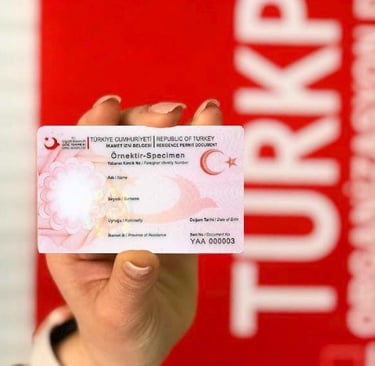
In Which Cases Can Foreigners in Türkiye Lose Their Residence Permit or Be Deported?
For foreigners living in Türkiye, maintaining the validity of a residence permit does not depend solely on whether the residence card has expired. If the conditions on which the residence permit was granted subsequently cease to exist, the permit is used for a purpose other than that for which it was granted, false documents are used, or the foreigner is considered a threat to public order, the residence permit may be cancelled and, in certain circumstances, a deportation decision may be issued.
Residence and deportation procedures for foreigners in Türkiye are primarily regulated under Law No. 6458 on Foreigners and International Protection (LFIP).
In this article, we explain the circumstances in which foreigners living in Türkiye may lose their residence permits and the situations in which they may face deportation.
1. In Which Cases Can a Residence Permit Be Cancelled?
A residence permit gives a foreigner the legal right to stay in Türkiye for a specific period and for a specific purpose. Therefore, if the foreigner subsequently loses the conditions required when obtaining the residence permit, the permit may be cancelled.
Particularly in relation to short-term residence permits:
Losing one of the conditions required for the residence permit,
Using the residence permit for a purpose other than the purpose for which it was granted,
Having a valid deportation decision or an entry ban to Türkiye,
Violating the rules concerning periods spent outside Türkiye
may result in the residence permit being cancelled or not being extended upon expiry.
For example:
If a foreigner has obtained a residence permit based on property ownership in Türkiye, the authorities may reassess the situation if the conditions underlying that residence permit cease to exist or if the permit is used for a purpose other than that for which it was granted.
Therefore, it is not always correct to assume that “my residence card has not expired yet, so my right to remain in Türkiye definitely continues.”
2. Expiry of the Residence Permit
A residence permit is issued for a specific period. Foreigners must submit their extension applications on time.
According to the Directorate General of Migration Management, residence permit extension applications may be submitted starting 60 days before the expiry date, and in all cases the application must be submitted before the existing residence permit expires.
A foreigner who remains in Türkiye for more than 10 days after the expiry of their residence permit without an acceptable justification may be subject to a deportation decision.
For this reason, it is extremely important to keep track of the expiry date of the residence card.
3. Using the Residence Permit for a Purpose Other Than Intended
A residence permit is based on a specific legal ground.
For example, different types of residence permits may be based on:
Property ownership,
Family ties,
Education,
Commercial activities or establishing a business,
Long-term residence.
If it is determined that the foreigner is using the residence permit for a purpose other than the purpose for which it was granted, the residence permit may be cancelled or may not be extended.
For this reason, it is important to select the correct type of residence permit when applying and to ensure that all information and documents submitted with the application accurately reflect the actual circumstances.
4. Using False Documents or Providing False Information
Providing false information or using fraudulent documents in procedures relating to entry into Türkiye, visas or residence permits may not only result in the loss of the residence permit but may also lead to deportation proceedings.
Under Article 54 of Law No. 6458, foreigners who provide false information or use fraudulent documents in procedures concerning entry into Türkiye, visas or residence permits may be subject to a deportation decision.
In particular, the following may have serious legal consequences:
Fake rental agreements,
False or inaccurate address information,
Fraudulent health insurance documents,
False family or educational documents,
Forged or altered official documents.
Every document submitted in a residence permit application should be genuine, up to date and verifiable.
5. Working Without a Work Permit
As a general rule, foreigners who wish to work in Türkiye must obtain the required work permit.
Foreigners found to be working without the required work permit may be subject to a deportation decision.
An important distinction must be made:
A residence permit does not, by itself, grant the right to work.
Having a valid residence permit in Türkiye does not mean that a foreigner has the right to work in every type of employment. The relevant legislation concerning work permits must also be considered.
6. Being Considered a Threat to Public Order, Public Security or Public Health
If a foreigner is considered to constitute a threat to public order, public security or public health while residing in Türkiye, this may constitute grounds for deportation.
Circumstances involving terrorist organisations or criminal organisations established for profit may also have serious consequences in terms of deportation.
In such cases, the issue may go beyond simply refusing to extend the residence permit, and deportation proceedings may be initiated directly.
7. Overstaying a Visa or Visa Exemption Period
Foreigners entering Türkiye with a visa or under a visa exemption must comply with the legal period of stay granted to them.
Under Article 54 of Law No. 6458, foreigners who exceed their visa or visa exemption period by more than 10 days may be subject to a deportation decision.
However, not every visa overstay automatically results in deportation. The length of the overstay, whether the foreigner voluntarily leaves Türkiye and the relevant administrative procedures may all be important.
8. Violating the Legal Period of Stay
If a foreigner remains in Türkiye after the expiry of their lawful period of stay, this may constitute a violation of the right to lawful stay.
In particular, a foreigner whose residence permit has expired and who remains in Türkiye for more than 10 days without an acceptable justification may fall within the grounds for deportation.
A violation of the legal period of stay may also result in an administrative fine and, in certain circumstances, an entry ban to Türkiye.
For this reason, foreigners should not simply assume, “My card has expired, but I will leave in a few days.”
9. Rejection of a Residence Permit Extension Application
A foreigner whose residence permit extension application has been rejected must carefully assess their legal status before continuing to stay in Türkiye.
Under Law No. 6458, foreigners whose residence permit extension applications are rejected and who do not leave Türkiye within 10 days may be subject to a deportation decision.
For this reason, the procedures that need to be followed after receiving a rejection decision and the applicable departure period should be carefully assessed by a legal professional.
10. In Which Cases Can a Deportation Decision Be Issued?
Article 54 of Law No. 6458 sets out the grounds for deportation in detail.
These include, in particular:
Using fraudulent documents or providing false information,
Being considered a threat to public order, public security or public health,
Working without a work permit,
Exceeding the visa or visa exemption period beyond the limits specified by law,
Having the residence permit cancelled,
Remaining in Türkiye for more than 10 days beyond the residence permit period without an acceptable justification,
Violating the rules concerning lawful entry into or exit from Türkiye,
Entering Türkiye despite an existing entry ban,
Failing to leave Türkiye within the required period following the rejection of a residence permit extension application.
11. Not Everyone Can Be Deported
The law also contains provisions preventing deportation in certain special circumstances.
For example, subject to the conditions specified by law, deportation decisions may not be issued against persons:
For whom there are serious indications that they would face the death penalty, torture or inhuman or degrading treatment in the country to which they would be deported,
Whose travel is considered risky due to serious health problems, age or pregnancy,
Who are undergoing treatment for a life-threatening illness and for whom adequate treatment is unavailable in the country to which they would be deported,
Who are benefiting from a victim support programme as victims of human trafficking,
Who are victims of psychological, physical or sexual violence, until their treatment has been completed.
However, the existence of these circumstances must be assessed individually in each case.
12. Can a Deportation Decision Be Challenged?
Yes.
A foreigner, their legal representative or their lawyer may apply to the administrative court within 7 days from the date on which the deportation decision is notified.
As a general rule, the court proceedings are concluded within 15 days and the court's decision is final. Furthermore, during the period for filing the action, or if an action has been filed, the deportation procedure is not carried out until the judicial proceedings are concluded unless the foreigner consents to the deportation.
Therefore, the 7-day period is extremely important following notification of a deportation decision.
The foreigner should not miss this deadline and should have the legality of the decision reviewed by a lawyer as soon as possible.
13. What Happens After a Deportation Decision?
As a general rule, foreigners subject to a deportation decision may be granted a period of no less than 15 days and no more than 30 days to leave Türkiye.
However, this period may not be granted to certain persons, including those considered to be at risk of absconding or disappearing, those who have used fraudulent documents, those who have violated the rules concerning lawful entry or exit, or those who pose a threat to public order, public security or public health.
Foreigners who do not leave Türkiye within the required period may be placed under administrative detention.
14. What Is the Difference Between Cancellation of a Residence Permit and Deportation?
It is important to distinguish between these two concepts.
Cancellation of a Residence Permit
This means that the validity of the foreigner's existing residence permit in Türkiye is terminated.
Deportation
This is an administrative procedure aimed at removing the foreigner from Türkiye.
However, these two procedures may be connected in certain circumstances.
For example, a foreigner whose residence permit has been cancelled may also become subject to deportation proceedings under Article 54 of the Law.
Therefore, “my residence permit has been cancelled, but no deportation decision has been issued” and “a deportation decision has been issued against me” are not the same legal situation.
What Should Foreigners Do to Maintain Their Legal Residence in Türkiye?
Foreigners living in Türkiye should pay particular attention to the following:
1. Keep track of your residence permit expiry date.
Do not leave your extension application until the last day.
2. Make sure your address information is up to date.
3. Use your residence permit in accordance with the purpose for which it was granted.
4. Do not provide false information or use fraudulent documents.
5. If you work in Türkiye, check whether a work permit is required.
6. If you spend extended periods outside Türkiye, check the rules applicable to periods spent abroad for your particular residence permit type.
7. If your residence permit application is rejected, have your legal status assessed without delay.
8. If a deportation decision is notified to you, do not miss the 7-day period for filing an action.
How Can Özocak & Altun Law Office Help?
For foreigners living in Türkiye, we provide legal consultancy and attorney services in the fields of residence permits and foreigners' law, including:
Residence permit applications,
Residence permit extensions,
Changes of residence permit type,
Review of residence permit cancellation decisions,
Legal remedies against residence permit rejection decisions,
Lawsuits against deportation decisions,
Procedures concerning entry bans to Türkiye,
Administrative detention and Removal Centre procedures,
Work permits and the legal status of foreigners in Türkiye.
Özocak & Altun Law Office assists foreigners living in Türkiye in protecting their rights during administrative and legal proceedings they may encounter.
Conclusion
Holding a residence permit in Türkiye does not give a foreigner an unlimited or unconditional right to remain in the country. The conditions underlying the residence permit must be maintained, lawful periods of stay must be respected, and the obligations imposed by foreigners and immigration legislation must be fulfilled.
Especially in cases involving cancellation of a residence permit, rejection of a residence permit extension application or a deportation decision, the applicable deadlines may be very short. Therefore, it is important to seek legal assistance without delay after receiving an official decision.
Important Notice: This article has been prepared for general informational purposes only. The legal consequences may vary depending on the foreigner's nationality, type of residence permit, period of stay in Türkiye, administrative decisions issued against them and other specific circumstances. Each individual case should be assessed separately.
info@ozocakaltun.av.tr
+90 533 641 0202
© 2025. All rights reserved.